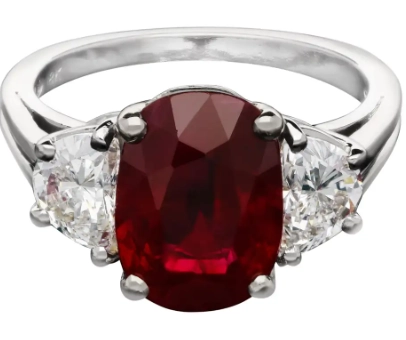
You're drawn to alexandrite for its magic – that stunning color change from emerald green to raspberry red. But before you invest in a piece, a practical question nags at you: is it tough enough? Can you actually wear it, or is it a museum piece? The answer isn't just a number. It's a story about structure, risk, and real-world care. Let's cut through the marketing fluff. A hardness of 8.5 on the Mohs scale is excellent, but it's not the whole story. I've seen too many people fixate on that score and overlook the finer points that lead to chips and heartbreak. Understanding alexandrite hardness is the difference between a heirloom that lasts and a repair bill.
What's Inside This Guide
Understanding the Mohs Scale (It's Not Linear)
First, let's clear up a huge misconception. The Mohs scale of mineral hardness isn't a ruler where 8 is twice as hard as 4. It's an ordinal scale – a ranking of scratch resistance. Developed by Friedrich Mohs in 1812, it simply means a mineral with a higher number can scratch any mineral with a lower number.
The jump between points isn't equal. The real difference in absolute hardness between a diamond (10) and a corundum (9) is massive, much larger than the gap between talc (1) and gypsum (2). When we say alexandrite is an 8.5, it sits firmly between topaz (8) and corundum (9), but much closer to corundum in terms of practical, everyday scratch resistance.
Key Insight: For jewelry purposes, anything at 7 and above on the Mohs scale is generally considered safe from everyday dust and abrasion (which contains quartz particles at hardness 7). Alexandrite, at 8.5, sails past this benchmark with room to spare. The main scratching threats in daily life – sand, granite countertops, other jewelry – won't touch it.
What an 8.5 Hardness Really Means for Alexandrite
So, alexandrite is hard. Very hard. In practical terms, this hardness rating gives you significant peace of mind.
Daily Wear Viability: An alexandrite ring is absolutely suitable for daily wear. Its surface will resist scratches from keys, coins, door handles, and accidental bumps against walls or furniture. You won't find fine hairlines on the surface after a year of wear like you might on softer stones like opal or pearl.
Comparison Context: This is where a table helps visualize its standing.
| Gemstone | Mohs Hardness | Key Durability Trait (Beyond Hardness) | Relative Care Level |
|---|---|---|---|
| Alexandrite | 8.5 | Good toughness, but has cleavage (a plane of weakness) | Moderate (handle with awareness) |
| Sapphire/Ruby (Corundum) | 9 | Excellent toughness, no cleavage | Easy (very resilient) |
| Topaz | 8 | Perfect basal cleavage (can split easily) | High (needs careful setting) |
| Quartz (Amethyst, Citrine) | 7 | Good toughness | Easy |
| Emerald (Beryl) | 7.5-8 | Often included, can be brittle | High |
See the nuance? Alexandrite's hardness is superb, but that column on "cleavage" is the critical asterisk everyone forgets. I once had a client bring in an alexandrite that chipped from a seemingly light tap on a faucet. The blow happened to hit exactly parallel to its cleavage plane. Hardness didn't matter in that scenario.
Durability Beyond Hardness: The Often-Ignored Factors
If you only remember one thing from this guide, let it be this: Hardness resists scratches. Toughness resists breaking. They are different.
Toughness: This is a material's resistance to chipping, cracking, and breaking from impact or pressure. Alexandrite has fair to good toughness. It's not as inherently shock-resistant as jade or diamond, but it's far from being overly fragile. The problem is its cleavage.
Cleavage – The Achilles' Heel: Many gemstones, including alexandrite, have planes of atomic weakness where they can split cleanly if struck. Think of it like wood grain. Alexandrite has distinct cleavage in one direction. A sharp blow parallel to this plane can cause a clean split, even though the stone is hard. This is why setting and protection are non-negotiable.
Stability: Excellent. Alexandrite isn't sensitive to light, heat (within normal jewelry repair limits), or common chemicals. You don't have to panic about perfumes or lotions degrading it like you would with pearls. Its color is stable for life.
The Practical Alexandrite Care & Cleaning Guide
Here’s the actionable advice. Based on its hardness and structure, here’s how to keep your alexandrite pristine.
Daily Do's and Don'ts:
Do put your alexandrite jewelry on last when getting ready, after hairspray and perfume.
Do take it off for heavy manual work: gardening, gym workouts, moving furniture.
Don't wear it in swimming pools (chlorine can attack metal settings, and hard knocks are possible).
Do store it separately in a soft pouch or a compartmentalized box. Remember, while alexandrite can scratch other stones, a diamond or sapphire in the same pile can scratch it.
Cleaning at Home: It's straightforward. Use warm water, a drop of mild dish soap, and a soft-bristled toothbrush (a baby toothbrush is perfect). Gently scrub behind the stone where grime collects. Rinse thoroughly and pat dry with a soft, lint-free cloth. Avoid ultrasonic cleaners unless you are 100% certain the stone has no fractures or liquid inclusions (ask your jeweler). Steam cleaners are generally safe for well-set alexandrite due to its thermal stability.
Your Personal Risk Assessment
| Activity | Risk Level for Alexandrite | Why & Recommendation |
|---|---|---|
| Typing/Office Work | Very Low | Minimal impact. Safe for daily wear. |
| Household Cleaning (with chemicals) | Low (for stone), Medium (for setting) | Stone is fine, but harsh chemicals can damage prongs. Best to remove. |
| Working Out / Sports | High | Risk of direct impact against equipment (weights, machines). Always remove. |
| Gardening / DIY | Very High | Direct impact risk from tools, dirt abrasion on setting. Definitely remove. |
| Beach or Hiking | Medium-High | Sand (quartz) won't scratch it, but a fall or knock on a rock could chip it. Assess the activity. |
Setting Considerations for Maximum Protection
The setting is your stone's bodyguard. For a stone with cleavage like alexandrite, this is critical.
Best Settings: Bezel Setting: My top recommendation for rings. A metal rim encircles the entire girdle of the stone, offering superb protection from knocks and chips. It's secure and modern. Channel Setting: Great for side stones in an eternity band. The stones are nestled side-by-side within a metal channel. Halo Setting: A circle of smaller diamonds or gems surrounds the center alexandrite. This adds a layer of physical protection and visual brilliance.
Settings to Consider Carefully: Prong Setting: The classic. It exposes more of the stone for light entry (great for color change) but leaves the girdle vulnerable. Opt for at least six sturdy prongs, not four flimsy ones. Ensure a skilled jeweler checks prong tightness annually. Pavé Setting: Beautiful, but the many small stones increase the risk of one being knocked loose. Ensure the metal beads holding them are robust.
Avoid tension settings or overly minimalist designs that leave the stone's edges exposed if you plan on active daily wear.
Your Alexandrite Hardness Questions Answered
Can I wear my alexandrite ring while gardening if I put gloves on?
I wouldn't. Gloves offer a false sense of security. The risk isn't just dirt on the stone; it's a sudden, concentrated impact. Hitting a trowel against a rock you didn't see, or smacking the ring against a hard garden pot handle transmits force directly to the stone. The cleavage plane doesn't care if you're wearing gloves. The potential repair cost and heartache far outweigh the convenience of leaving it on. Take the 10 seconds to put it in a safe spot indoors.
My jeweler said alexandrite is "harder than sapphire." Is that true?
No, that's incorrect and a red flag about that jeweler's knowledge. Sapphire (corundum) is a 9 on the Mohs scale. Alexandrite (a chrysoberyl variety) is an 8.5. The scale is clear. Sapphire is harder. What they might be confusing is rarity or value. Natural alexandrite is far rarer than sapphire, but in terms of pure scratch resistance, sapphire wins. However, for daily wear, both scores are exceptionally high and the practical difference is minimal. The bigger difference is sapphire's lack of cleavage, giving it a slight edge in toughness.
How often should I get the setting checked for a daily-wear alexandrite ring?
At least once a year. Make it a habit, like a dental check-up. A professional will clean it thoroughly and, more importantly, inspect the prongs or bezel under magnification for wear, thinning, or lifting. They'll also check if any stones in a halo or pavé setting are loose. Catching a worn prong before it fails can save your stone from falling out. I've seen too many "it was fine yesterday" disasters that an annual check could have prevented.
Does a higher hardness mean my alexandrite will never get scratched?
Nothing is scratch-proof except a diamond (10). While alexandrite's 8.5 hardness makes it highly resistant, it's not invincible. If you rub it directly against a sapphire (9), a diamond (10), or a man-made abrasive like silicon carbide, you can scratch it. The key is that common, accidental contact in daily life won't do it. Deliberate, forceful contact with a harder material will. Store it separately from other diamond or corundum jewelry to prevent any chance of them grinding against each other in your jewelry box.
Is lab-created alexandrite just as hard as natural alexandrite?
Yes, identically. Lab-created alexandrite has the same chemical composition (BeAl2O4) and crystal structure as its natural counterpart. Therefore, it shares the exact same physical properties: an 8.5 hardness, the same cleavage, and the same color-change phenomenon. From a durability and care perspective, you treat them the same. The advantages of lab-grown are typically a lower cost for a larger, cleaner stone, but the rules for protecting it from impacts remain unchanged.
Final thought. Alexandrite's hardness makes it a genuinely wearable treasure. Respect its minor structural quirks, give it a sensible setting, and follow basic care rules. Do that, and you'll have a stone whose magic – and physical integrity – lasts for generations. It's not a delicate flower; it's a hardy perennial that just needs a smart gardener.