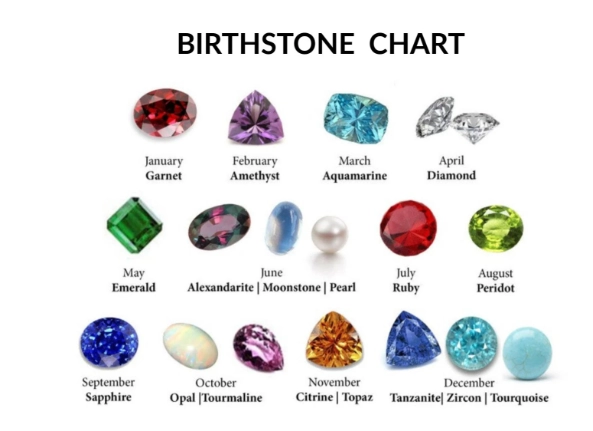
Let's get straight to the point. If you ask "What is the real birthstone for November?" today, the official answer is: both topaz and citrine. That's right, November is one of the few months blessed with two official birthstones. But that simple answer hides a fascinating, centuries-old story of confusion, commerce, and gemology. It's not just about picking a yellow stone; it's about understanding history, mineral science, and what you actually want from your jewelry.
I've been collecting and writing about gems for over a decade, and the November birthstone question is one I hear most often, usually followed by a look of confusion. Most people have heard of topaz. Many have seen citrine. Few know why they share a month or how to tell them apart in a meaningful way. This isn't just trivia—it affects the value, durability, and meaning of the jewelry you or a loved one might wear.
What You'll Discover Inside
The Historical Claim: Why Topaz Ruled for Centuries
For most of recorded history, topaz was the undisputed November birthstone. Ancient texts and traditional lists, like the ones rooted in Biblical Aaron's breastplate or 15th-century Polish traditions, consistently associated a golden-hued gem with November, and that gem was topaz.
Here's a critical nuance most articles miss: the word "topaz" in ancient times likely didn't always refer to the mineral we call topaz today. Scholars like those at the Gemological Institute of America (GIA) note that the term was often used for any yellow gemstone, particularly peridot or yellow sapphire. The real mineral topaz, an aluminum silicate fluoride hydroxide, came into clearer focus much later. So historically, the "topaz" birthstone was more about the color—the warm, golden glow of autumn—than the specific mineralogy.
Imperial topaz, with its stunning sherry-orange to pinkish-orange hues, was especially prized by Russian royalty, cementing its luxurious status. This long, prestigious history is why topaz feels like the "original" November stone.
The Modern Duo: How Citrine Joined the Party
The shift happened in the 20th century. In 1912, the American National Association of Jewelers (now Jewelers of America) standardized the modern birthstone list to streamline marketing. They wanted clear, consistent associations for each month.
November presented a problem. Fine topaz, especially the prized blue and imperial colors, was (and is) relatively rare and could be expensive. The jewelers wanted an accessible, affordable alternative that captured the essential yellow color of the traditional November stone. Enter citrine.
Citrine is the yellow variety of quartz. Its name comes from the French "citron" for lemon. Crucially, much of the citrine on the market is not naturally yellow. It's heat-treated amethyst (purple quartz) or smoky quartz. This treatment is stable and permanent, creating those rich amber and Madeira hues. The 1912 list officially added citrine as a second November birthstone, giving everyone a beautiful, budget-friendly option. The UK's National Association of Goldsmiths later solidified this dual-stone status.
The Big Picture
Think of it this way: Topaz is the historical, classic choice. Citrine is the accessible, modern counterpart. Neither is more "real" than the other in the official sense. Your choice depends on your budget, style, and the qualities you value most.
Topaz vs. Citrine: A Side-by-Side Breakdown
Don't just go by color. Understanding their fundamental differences will help you make a smarter choice and avoid overpaying. Here’s the hard data.
| Feature | Topaz | Citrine |
|---|---|---|
| Mineral Family | Silicate mineral of aluminum and fluorine. | Variety of quartz (silicon dioxide). |
| Hardness (Mohs Scale) | 8 – Excellent for daily wear. Resists scratches well. | 7 – Good for daily wear, but can be scratched by harder materials. |
| Color Range | Incredibly diverse: Colorless, yellow, orange, red, pink, blue, brown. Natural blue is rare; most is treated. Imperial topaz (orange-pink) is most valuable. | Stays in the yellow family: Pale lemon to dark amber, brownish-orange. Most commercial citrine is heat-treated. |
| Clarity & Sparkle | Often very clean with a bright, glassy luster. Can have high brilliance. | Typically eye-clean. Has a bright vitreous luster but slightly less "fire" than topaz. |
| Key Distinguishing Factor | Higher density. A topaz will feel heavier than a citrine of the same size. | More affordable and widely available. The go-to for large, statement pieces. |
| Biggest Practical Concern | Perfect cleavage. Can split if hit sharply along a specific direction. Needs a protective setting. | No cleavage, so it's tougher against chipping from impacts. More resilient in rings. |
That last point about topaz cleavage is a gemologist's secret. Many jewelers won't mention it. I've seen a beautiful topaz ring crack because it was set in a prong setting that was too shallow and got knocked the wrong way. For a ring, a bezel setting that protects the girdle is a safer bet for topaz.
How to Choose Your November Birthstone
This isn't about right or wrong. It's about what fits your life. Let's break it down by scenario.
Choose Topaz If...
You want the traditional, historical gem with a legacy. You're drawn to rarity and value, especially for pieces like imperial topaz. You prioritize maximum hardness (that 8 on the Mohs scale matters for long-term scratch resistance). You love a wider color palette—maybe a London blue topaz for a cool, modern look instead of yellow.
Choose Citrine If...
Your budget is a primary concern. You can get a much larger, more impressive stone for the same price. You need a stone for an active-wear ring. Its toughness and lack of cleavage make it a more worry-free choice for daily knocks. You adore the warm, sunny yellow to deep amber hues and want a stone that's consistently available.
Personally, I recommend citrine for a first birthstone ring, especially for younger people or those with active hands. It's forgiving. Save the investment in a fine topaz for a pendant or earrings, where cleavage is less of a risk.
Buying & Care Guide: Making It Last
Knowing what to ask and how to care for your stone is where the real value lies.
When Buying:
- Ask about treatment: For topaz, ask "Is this color natural or treated?" (Most blue is treated). For citrine, "Is this naturally colored or heat-treated?" (Most is treated). Treatment isn't bad—it creates beautiful, stable colors—but it should be disclosed and will affect price.
- Check the setting: For topaz rings, look for a secure bezel or deep, robust prongs. Avoid tension settings.
- Weight vs. size: Remember, a one-carat topaz will be physically smaller than a one-carat citrine because topaz is denser. Focus on millimeter measurements for size comparisons.
Care Instructions:
- Cleaning: Warm soapy water, a soft brush, and a gentle rinse work for both. Avoid ultrasonic cleaners for topaz due to its cleavage; they're usually safe for citrine.
- Storage: Keep them separate from harder gems like diamonds, sapphires, or even other topaz pieces to prevent scratches, especially on citrine.
- Topaz-specific: Avoid sudden temperature changes and sharp blows. Take it off for manual labor, gym workouts, or gardening.
Your November Birthstone Questions, Answered
I've heard citrine is just "cheap topaz." Is that true?
Not at all. That's a common misconception that undervalues citrine. They are completely different minerals (quartz vs. topaz). Citrine is more affordable because quartz is far more abundant in the Earth's crust than topaz. Calling it "cheap" ignores its own beauty, durability, and the fact that fine, natural (untreated) citrine from places like the Congo is actually quite rare and collectible. It's a different gem with its own merits, not a knock-off.
Can I wear both topaz and citrine together in one piece of jewelry?
Absolutely, and it can look stunning. The key is to ensure they are protected from scratching each other. Since topaz (8) is harder than citrine (7), the topaz could theoretically scratch the citrine if they rub together aggressively. A good jeweler will set them so they don't make direct contact or will use spacers. In a necklace or earrings, this risk is minimal.
What's the most expensive November birthstone color?
Hands down, it's natural, untreated imperial topaz with a vivid reddish-orange to pinkish-orange color. Stones from the Ouro Preto region of Brazil are the benchmark. After that, fine natural pink topaz commands high prices. For citrine, the deepest, most saturated Madeira (reddish-brown) colors are typically the most valuable, though the price difference across citrine colors is much less dramatic than with topaz.
How can I be sure I'm not buying glass or a synthetic look-alike?
For citrine, glass imitations are common. Real citrine will feel cooler to the touch than glass. Under a loupe, glass may have bubbles or swirls, while citrine will have natural inclusions like faint lines or tiny crystals. For topaz, its heft (weight for its size) is a big clue. The best practice is to buy from a reputable jeweler who provides a detailed description. Ask if the stone is natural, and what, if any, treatments it has undergone. A trustworthy seller will have no problem answering.
Is yellow sapphire also a November birthstone?
No, yellow sapphire is not an official modern birthstone for any month, though historically "topaz" may have referred to it. Yellow sapphire is its own precious gem (a variety of corundum) and is sometimes associated with Jupiter in Vedic astrology. It's a beautiful yellow gem, but for the specific purpose of a November birthstone, the official choices are topaz and citrine.
So, what is the real birthstone for November? The answer is wonderfully double-barreled. You have a choice between the regal, diverse, and historically rich topaz, and the sunny, accessible, and surprisingly tough citrine. Your "real" stone is the one that resonates with your story, your style, and how you plan to wear it. Armed with this knowledge, you can walk into a jewelry store or browse online with confidence, knowing exactly what you're looking at and why it matters.